Teleoperation Control Modes in Autonomous Driving

Autonomous driving presents the possibility of a future where individuals can engage in personal activities while traveling, without the need to focus on driving. Yet, questions remain as to whether such a future, free from manual vehicle control, will truly materialize. This blog introduces two distinct teleoperation methods designed to maximize the potential of safe autonomous driving.  

The Spectrum of Autonomous Driving  

As defined by SAE International, a global professional association of engineers in the automotive industry, automated driving systems are classified into six levels, ranging from Level 0 to 5.   
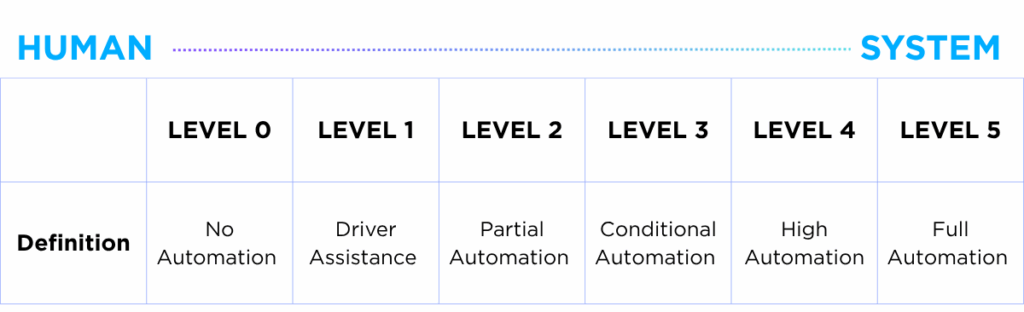
Six Levels of Autonomous Vehicles

Level 0 represents full manual control, where the driver is entirely responsible for operating the vehicle, a scenario that reflects most current driving experiences. At this stage, no autonomous technology is applied.  

For Levels 1 to 2, vehicles begin to assist the driver with features such as Smart Cruise Control, Lane Following Assist (LFA) and Autonomous Parking. From Level 3, autonomous driving becomes more pronounced, with conditional automation enabled under specific circumstances.  

Level 4 marks a critical milestone in the advancement of autonomous driving. While it shares similarities with Level 3 in that the vehicle can autonomously steer the wheel, the key distinction lies in its ability to manage hazardous situations without human intervention. As such, Level 4 marks the stage where full automationstarts to materialize.  

Level 5 represents the highest level of vehicle autonomy, where a car can navigate across all environments without any restrictions on an ODD (Operational Design Domain), a set of defined conditions under which an autonomous system is designed to safely operate. At this stage, full automationis reached 

Most of the autonomous vehicles we see around us are currently positioned at Level 3When a situation comes where AI (Artificial Intelligence) technology fails to respond, the driver needs to take command over vehicle operations and responsibility is bestowed upon the driver in case an accident arises. The maturity of autonomous technology becomes pivotal from Level 4 where the car must proactively respond to emergency situations in a safe manner without the interception of the driver.  

Currently, autonomous vehicles are not yet resistant to object misdetection as they collect information through sensor devices such as cameras, radars, and LiDAR technology. Even if all sensors around the surrounding object are properly functioning, there may be instances where AI cannot fully comprehend an untrained scenario. In this case, human control becomes pivotal, whether it comes from the driver itself or from another subject. This is where teleoperation methods become relevant.  

The Necessity of Teleoperations in Autonomous Driving  

Imagine a typical scenario in which you are commuting home from work in an autonomous vehicle, using self-driving mode to catch up on delayed tasks. Suddenly, the vehicle encounters a situation where the conditions necessary for safe autonomous operations are no longer met. In other words, the system is unable to function properly, requiring the driver to assume control and take full responsibility. However, with the deadline approaching and the task still unfinished, the driver may choose to request teleoperation support. In such cases, a remote operator can assist in managing the situation without requiring the driver to take full control.  
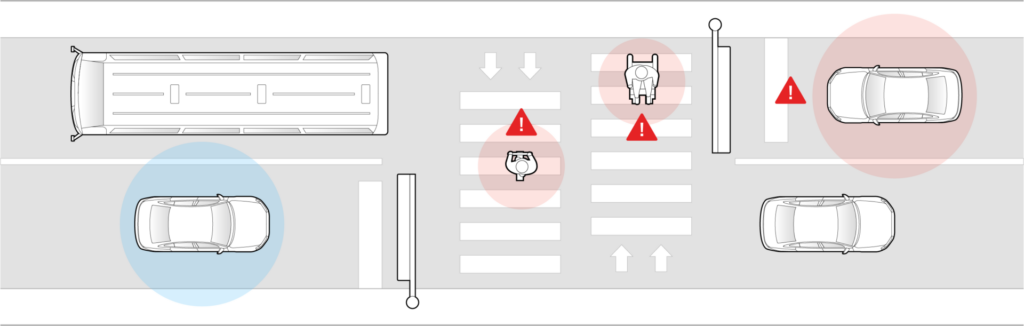
Necessity of teleoperation services on the road

Teleoperation service can also be deployed in more extreme scenarios, such as during wartime or natural emergencies. This is unsurprising, given that the origins of teleoperation technology are rooted in military applications. As early as the 19th century, efforts were made to develop remotely controlled torpedoes, and the technology has continued to be explored for defense-related purposes ever since. One notable example is inventor Nikola Tesla’s 1898 demonstration of a remote-controlled torpedo—an ambitious attempt that, despite ending in failure, marked a pivotal moment in the history of teleoperation. 

Teleoperation use in the military

The use of teleoperation in military contexts is especially pivotal, as deploying personnel in active war zones can be extremely hazardous. In such cases, teleoperated vehicles or robots can be strategically positioned to reduce risk to human life. When factoring in the use of drones, teleoperation represents one of the most dynamic and rapidly evolving areas of military technology.  

Teleoperation Control Modes in Autonomous Vehicles – Direct and Indirect  

Teleoperations refer to the technology that enables communication and control between a vehicle and an external location, typically coordinated through a centralized control center. In essence, when an autonomous vehicle encounters an unexpected situation that its onboard AI cannot handle, a remote operator at the control center can intervene and take effective control of the vehicle on behalf of the user.   

There are two main types of teleoperation control: direct and indirect, differentiated by the level of human involvement. In ‘direct teleoperation,’ a remote operator takes full, real-time manual control of the vehicle. In contrast, ‘indirect teleoperation’ involves shared control, where the vehicle retains partial autonomy while the operator provides high-level guidance.
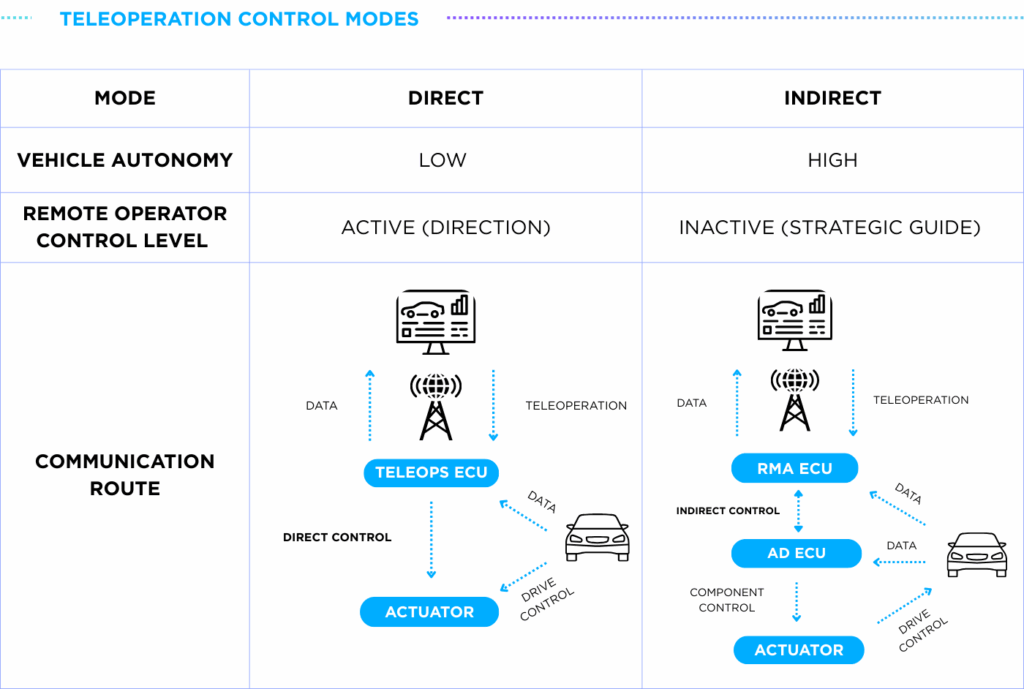
Difference between two teleoperation control modes

Automakers have explored teleoperation as a solution for complex scenarios. For example, in December 2022, Hyundai Motors partnered with Israeli startup Ottopia to develop a teleoperation system called Remote Mobility Assistance (RMA), aimed at supporting Level 4 and higher autonomous driving instances. More recently, Tesla announced they were set to launch a limited robotaxi service in Austin, Texas, by the end of June 2025, heavily relying on teleoperators to assist in situations where the autonomous system encounters difficulties.  

Direct Teleoperation Control  

While teleoperation holds great promise, it also presents significant challenges, particularly when it comes to direct control. One major issue arises when there are network disruptions affecting data transmission, and information sent from the vehicle to the teleoperator gets delayed or not reflected in real time. Although rare, instances of network latency or unstable communication can cause a time lag in the control center’s response, potentially making it impossible to prevent an accident.  

Moreover, an overreliance on direct teleoperation can be seen as an inefficient use of the advanced capabilities built into autonomous vehicles. Given that vehicles are already equipped with advanced sensors like LiDAR, radar and camera sensors for real-time decision-making, delegating control to a remote operator may underutilize these capabilities and limit the system’s full potential.   

Indirect Teleoperation Control  

Recognizing the limitations of direct teleoperation, current research highlights indirect teleoperation control as a more effective complementary solution.  

 As the term suggests, under indirect control, the teleoperator does not directly issue commands ranging from handle steering, acceleration, or braking. Instead, high-level or abstract commands are transmitted, while the vehicle itself executes detailed actions. This approach reduces dependence on constant network communication and allows the vehicle to make better use of its internal technologies.   

 A primary example of indirect teleoperation control in action is navigational route assistance,” where drivers receive guidance from the vehicle on the most optimal path to reach a specific destination. Another use case isrecognition alerts,” where the system advises the vehicle on whether to detour or disregard certain road obstacles.   

While direct teleoperation is always subject to the risk of unstable telecommunications, indirect teleoperation significantly reduces this vulnerability by making the vehicle less dependent on network connections. In this mode, the vehicle makes real-time decisions autonomously, with the teleoperator offering directional input rather than direct control. All onboard components and safety systems of the vehicle remain fully active and engaged, further reducing reliance on the control center operator.  

Enabling safe autonomous driving through teleoperation control  

It is expected that Level 4 autonomous vehicles will interchange modes between autonomous driving, direct teleoperation and indirect teleoperation. Although skepticism persists about when Level 5 autonomy will be fully achieved, advancements in the integration of internal and external communication systems continue to accelerate, bringing the future of save autonomous driving ever closer.  

AUTOCRYPT stands as a leading automative cybersecurity provider with experience in facilitating remote driving assistance environments. In particular, AutoCrypt® RODAS (Remotely Operated Driving Assistance System) provides a failsafe for autonomous vehicles by giving authority for an authorized operator to take control over a vehicle when an unexpected situation arises. This can be done either remotely (i.e. teledriving) or through configuring driving policies based on the situation reported by the occupants (i.e. teleguidance).

To learn more about the Autocrypt’s teleoperation services, click here. Read our blog for more technology insights or subscribe to AUTOCRYPT’s monthly newsletter. 
AUTOCRYPT Selected as Top 3 Automotive Cybersecurity Innovator by Frost & Sullivan

AUTOCRYPT, a leading automotive software solutions provider, announced that the company had been named in Frost & Sullivan’s “Frost Radar™ Report for Automotive Cybersecurity 2024,” placing third overall in indices for Innovation, and fourth in Growth.

아우토크립트, 글로벌 자동차 보안 혁신 기업 Top 3 선정…아태기업 중 유일

A leading global consulting firm, Frost & Sullivan releases the Frost Radar to offer strong market research evaluating companies across Innovation & Growth in their respective industries. The 2024 report for Automotive Cybersecurity assessed over 20 global companies, and Autocrypt was the only company from the Asia-Pacific region to rank among the top seven performers.

Seokwoo Lee, Founder and CEO of Autocrypt, said regarding the report, “The recognition is a validation of our technological excellence in delivering innovative standards and regulatory compliant solutions. Our commitment to comprehensive cybersecurity for our OEM and Tier-1 customers drives us to support the industry’s shift to software-defined vehicles.”

Senior Industry Analyst at Frost & Sullivan, Dorothy Amy remarked, “With the increase in countries that mandate cybersecurity, manufacturers and suppliers will have to prove a strong foundation of cybersecurity before vehicles can go on the market. Autocrypt is emerging as a key company in ensuring compliance-ready, product-grade security for vehicles worldwide.”

The recognition from Frost & Sullivan highlighted AUTOCRYPT’s comprehensive suite of security solutions that covers the wide breadth of the transportation ecosystem, covering V2X, in-vehicle systems, to EV charging security. The company most recently announced that its offerings would extend to PQC-compliant solutions, preparing the automotive industry for a post-quantum future.

Learn more about Autocrypt’s security solutions at autocrypt.io.

Cyber Resilience Act Explained: What It Means for the Automotive Industry

With the rapid rise of products utilizing AI, IoT, and connected technology, there has been growing concern across all industries of the cybersecurity risks associated with embedded technology. In response, in December 2024, the European Union put into force the Cyber Resilience Act (CRA), aiming to raise the baseline for security for all digital products and solutions sold in the EU.

Though the regulation originated in Europe, its impact will be global, as today’s interconnected market and supply chain crosses borders. Here’s a closer look at the CRA, why it matters, and its implications on the world’s automotive sector.

What is the Cyber Resilience Act?

The CRA is a legal framework that outlines cybersecurity requirements for products (both hardware and software) with digital elements sold within the European Union. The CRA casts a much wider net than requiring cybersecurity for traditional IT systems, covering everything from smart watches, refrigerators, to agricultural vehicles. In fact, the regulation not only applies to the products themselves, but the full lifecycle of IoT and digital products.

The objective of the CRA is to improve consumer safety, build trust in the digital marketplace, and ensure that manufacturers are held accountable for the security of their products. With this overarching regulation, the hope is that the CRA will foster more transparency for the digital ecosystem, ultimately encouraging innovation while still protecting both businesses and consumers from emerging cyber threats.

The CRA mandates a “security-by-design” approach, which means that companies must integrate cybersecurity from design through the end-of-life (EOL). It also requires vulnerability management and updates, along with compliance and documentation.

Key Implications for Industries Utilizing Connectivity

More and more industries are implementing connected technologies into their supply chain, which means the CRA targets a wide range of industries, including defense, IT infrastructure, and robotics/smart factory, to name a few.

Healthcare & Medical Devices: Many healthcare products now boast connectivity and dedicated user support. Products like remote monitoring tools, smart implants, and other medical devices must secure processed data and ensure device integrity.

Smart Manufacturing: Factories often use IoT and smart automation to optimize their factory lines. Networks and real-time operations must protect against cyberattacks that could disrupt industrial processes.

Space & Defense Systems: Satellites and mission-critical technologies must use robust protection to safeguard against cyber threats and protect sensitive operations for national security.

Agricultural Machinery: Like connected vehicles, agricultural transport is becoming much more connected and software-driven, meaning vehicles like autonomous tractors and sensor-based farming equipment must comply with the CRA as well.

CRA: More than the Law

The CRA represents more than just regulation within the EU. It signals a global shift towards mandatory cybersecurity standards for connected solutions, including all types of vehicles. Early preparation will be key, as manufacturers must utilize security-by-design principles from the development stage of all products.

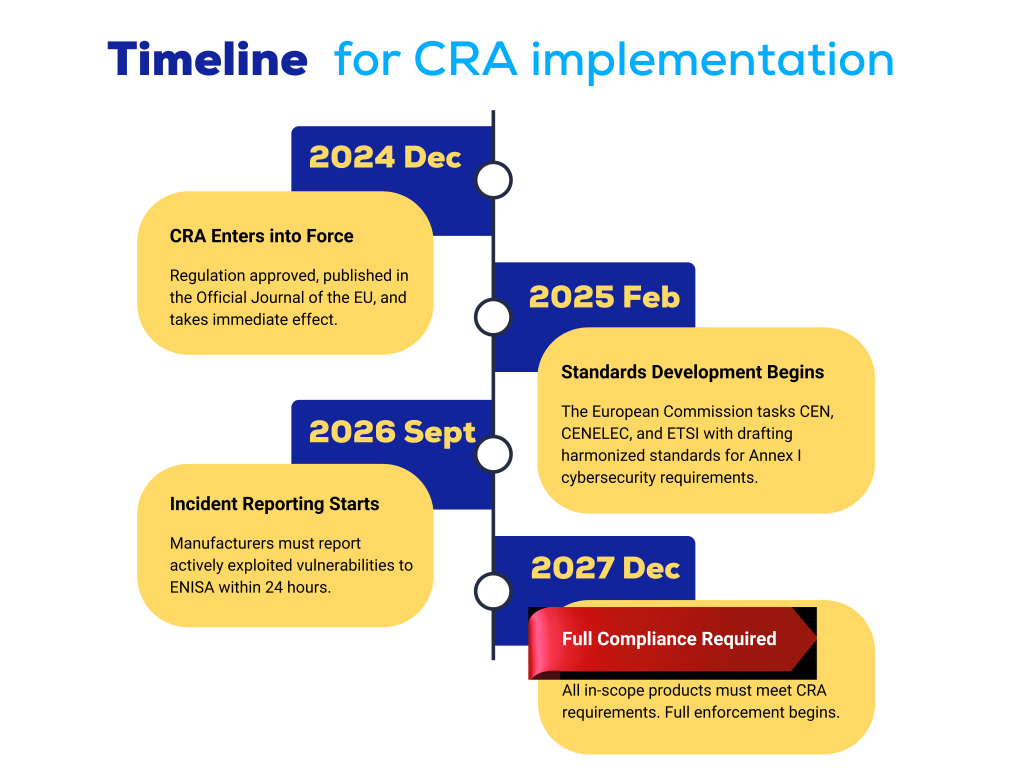
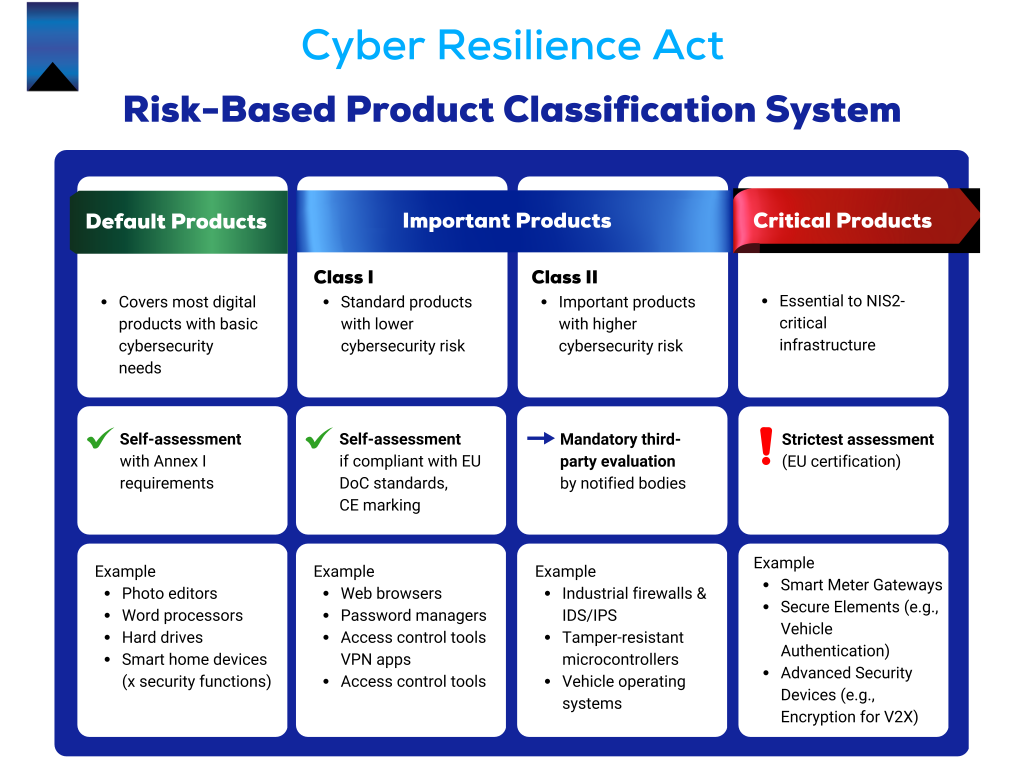
The CRA introduces a risk-based product classification system, allowing a transition period until December 2027 for full compliance.

CRA timeline infographic

A lack of cybersecurity resilience increases likelihood of a cyber attack, which can not only lead to operational disruption and financial loss within a company’s supply chain and sales funnel, but can also result in legal ramifications. Non-compliance will result in fines of up to €15 million or 2.5% of global turnover and potential EU market bans, which could also result in a lack of brand awareness or worse, negative brand image.

Why the Automotive Industry Should Care

While most automotive vehicles are excluded from the CRA due to the overlapping nature of the CRA regulations with existing regulations (like the WP.29 R155 and EU General Safety Regulation, GSR), certain automotive components like digital components, aftermarket software, andconnected services, as well as vehicles not covered under R155 (like construction or agricultural vehicles) are still subject to the CRA.

Vehicles are complex digital ecosystems, and with more and more technology being embedded into the architecture, compliance will also become more complex. While the details of the CRA are still being worked out, the automotive industry will have to move quickly, as the impacts of the regulation will be wide-ranging. Manufacturers and suppliers can begin by aligning with existing guidelines for cybersecurity resilience in vehicles:

   •  Standard and Regulation Compliance: Automotive manufacturers will have to ensure that they comply with the existing regulations like UNR-155 and GSR, and are recommended to follow standards like ISO/SAE 21434 when it comes to vehicle architecture and connected platforms.

 •  Secure OTA Updates: Manufacturers can ensure that their Over-the-Air (OTA) capabilities are secure and efficient, and ensure that vulnerabilities are patched in real-time.

 •  Regular testing: Testing current architecture for vulnerabilities can be a great starting point to analyze where mitigation is needed.

 •  V2X security and Security Credential Management Systems: While a Security Credential Management System (SCMS) isn’t explicitly required by the CRA, it can support compliance by demonstrating security best practices.

AUTOCRYPT has been closely involved in cybersecurity regulatory compliance from the early stages, focusing on practical, optimized solutions for manufacturers and suppliers. Our expertise in automotive and IT cybersecurity empowers our partners to seamlessly meet regulatory requirements while strengthening their product reliability, market competitiveness, and maintain a positive brand image.

To learn more about the CRA, click here. To contact our team about how your company can get started with CRA compliance, contact global@autocrypt.io.

Post-Quantum Cryptography, and the Future of Automotive Cybersecurity 

As of late, there’s been a lot of worried and concerned discussion regarding quantum computing. There are concerns that once quantum computers become available, all IT systems will collapse and be hacked; some blockchain enthusiasts worry that cryptocurrencies will become obsolete; governments worry that national security systems may be compromised. Are these valid concerns? In today’s blog, we’ll explore what quantum computers are and what we can do to manage concerns about the future.  

What is Quantum Computing?

The modern-day computer uses “bits” as the basic unit, while quantum computers use “qubits.” The key difference is the way that qubits exist. For example, a bit can be a 0 or a 1, but a qubit can be a 0, 1, or both at the same time. Imagine a spinning coin. While spinning, a coin can be both heads and tails. In quantum mechanics, this is called the principle of superposition, and this superposition allows for quantum computers to process many possibilities simultaneously.  

Another interesting property of qubits is entanglement. When qubits are “entangled,” the state of one qubit is directly related to the state of another. This means that if a qubit changes its state, it will instantly affect the other. This phenomenon of qubits enables quantum computers to perform complex calculations far more quickly than a computer using bits, which processes information in a linear, sequential manner.  

Quantum computers are still in the early stages of development, and larger tech companies have already begun to create and use quantum computers for research and experimentation. Many experts will say that the quantum computers available today have a relatively small number of qubits and are susceptible to errors. However, some are optimistic that the technology will achieve more accuracy and broader use very soon. 

What is Post-Quantum Cryptography (PQC)?

While quantum computing holds great promise for solving more complex problems, it also presents a great risk. If misused, quantum computers could, in theory, break encryption methods that secure sensitive data like personal communications, banking transactions, and even confidential government data.  

This is why the development of Post-Quantum Cryptography is crucial to safeguard against this potential threat.  

Post-quantum cryptography (PQC), in simple terms, refers to cryptographic algorithms that are secure even in quantum computing environments. Unlike the traditional cryptographic systems we use today, such as RSA or ECDSA, PQC algorithms rely on mathematical structures that quantum computers are less likely to break, such as lattice-based, hash-based, code-based, or multivariate polynomial-based.

Developing PQC for different use cases is essential because if we wait until quantum computing reaches supremacy, it could quickly render current cryptographic systems obsolete, leaving data vulnerable. The transition to PQC should begin now, as preparing for a quantum future will require proactive effort to ensure cybersecurity frameworks remain intact and resilient.  

PQC Standardization and Regulatory Development

In 2016, the National Institute of Standards and Technology (NIST) launched a competition to standardize PQC. Researchers from all over the world submitted algorithms and through several rounds, 82 proposals were reviewed and in 2022 four algorithms were chosen: SPHINCS+, CRYSTALS-DILITHIUM, CRYSTALS-KYBER, and FALCON. They are incorporating these standards into the Federal Information Processing Standards (FIPS) document, and additional rounds will likely select new algorithms for digital signatures or other uses.  

In April 2024, the European Commission published a recommendation for member states to develop a strategy for implementing PQC, which would define clear goals and timelines for the implementation. This has led several workstreams and think tanks to actively participate in developing and implementing PQC into the European digital infrastructure.  

In 2022, the U.S. passed the “Quantum Computing Cybersecurity Preparedness Act,” which included a federal mandate for federal agencies to transition to PQC. The NSA announced that by 2035, all national security systems should implement PQC.  

In South Korea, the transition to PQC is being actively addressed by the National Intelligence Service and the Ministry of Science and ICT. They released their roadmap for transitioning to quantum-resistant cryptographic systems in 2020, and the roadmap was designed to span over a 15-year period, setting the goal of fully integrating PQC by 2035. 

PQC in Automotive Cybersecurity

The global implementation of PQC roadmaps is ongoing, and use cases can vary across governments and organizations, but one of the most important areas is the automotive industry. As modern vehicles are increasingly becoming software-centric, vehicle architecture is becoming increasingly sophisticated, integrating advanced connectivity features like OTA updates and V2X communications. These advancements enable smarter and more convenient mobility but also create a myriad of cybersecurity challenges if the vehicle architecture is breached, as many of the cryptographic methods were designed for more traditional computing environments.  

However, though regulations and standards do not yet mandate its implementation, manufacturers, suppliers, and solution providers in the industry have already begun to explore and evaluate PQC implementation:  

  • NXP Semiconductors is developing quantum-resistant firmware updates for vehicle applications 
  • Vodafone is testing PQC-secured VPNs, which is focused more on network security, but the company states it could be extended to connected vehicle applications 
  • LG U+ showcased its PQC-based applications like secure digital keys and infotainment systems at CES 2023, and continues to develop quantum-resistant technology for network and cellular applications 

As with traditional IT systems, once quantum computing reaches supremacy, vehicle systems could be vulnerable to attacks. Transition to PQC before quantum computing reaches practical implementation is crucial, as many worry that bad actors could already be stockpiling encrypted automotive data, waiting for quantum computing to enable them to decrypt, a long-term attack strategy known as “Harvest Now, Decrypt Later” (HNDL). 

Preparing for the Post-Quantum Future

While there’s no way to know when quantum computers will reach practical supremacy, one thing is clear: the transition to PQC is no longer a theoretical need but an urgent necessity, especially invehicle applications.  

However, transitioning to PQCbased solutions comes with its own set of challenges. PQC algorithms require a greater amount of computational power, which can be a concern for existing automotive hardware. This is why early testing, standardization, and collaboration will prove to be invaluable for realistic integration.  

The dilemma is not whether we should implement PQC but how quickly we can make it a reality. The automotive sector has a lot of work to do, and security solutions providers like AUTOCRYPT are on track to ensure that the transition happens efficiently and securely. 


To stay informed about the latest news on mobility tech and software-defined vehicles, read our blog for more technology insights or subscribe to AUTOCRYPT’s monthly newsletter.
AUTOCRYPT Launches India-Compliant V2X Security Certification System, Expanding Global Reach

AUTOCRYPT becomes the only company to support V2X security standards across North America, Europe, China, Korea, and India. 

AUTOCRYPT, a leading automotive cybersecurity company, announced its successful development of its India-compliant V2X (Vehicle-to-Everything) security certification system, optimized for cloud-native environments. The system is now in delivery to Indian automotive manufacturers, further expanding the company’s global footprint in the V2X landscape. 

As the only company worldwide that supports all major V2X security credential management system standards, including North America (US-SCMS), Europe (EU-CCMS), China (C-SCMS), Korea, and now India, AUTOCRYPT continues to set new industry benchmarks. This achievement not only marks the company’s entry into an emerging market, but also validates its expertise in V2X security technology. 

The global V2X market is projected to grow and amid this changing landscape, Indian automakers and suppliers have made their presence known. India is increasing its demand for robust V2X technology as a key component in its smart city initiatives.  

India is the world’s fourth-largest automotive producer, with nearly 6 million vehicles manufactured in 2024. The Indian market represents a key opportunity for growth, but this also means that ensuring security and compliance will be critical,” said Seokwoo Lee, CEO of AUTOCRYPT. He continued, “With extensive expertise across V2X security deployment for multiple regulatory requirements, we are committed to advancing and playing a key role in India’s V2X ecosystem.” 

AUTOCRYPT most recently showcased its technological capabilities to DOT and industry leaders in Wyoming, successfully demonstrating V2X interoperability. AUTOCRYPT is well-positioned to ensure compliance with India’s security and type approval standards, allowing automotive manufacturers to seamlessly integrate secure V2X communications into vehicles. 

Learn more on how AUTOCRYPT secures V2X communications by contacting global@autocrypt.io. 

About Autocrypt Co., Ltd. 

AUTOCRYPT is the industry leader in automotive cybersecurity and connected mobility technologies. The company specializes in the development and integration of security software and solutions for in-vehicle systems, V2X communications, Plug&Charge, and mobility platforms, paving the way towards a secure and reliable C-ITS ecosystem in the age of software-defined vehicles. AUTOCRYPT also provides consulting and testing services along with custom solutions for UN R155/156 and ISO/SAE 21434 compliance. 

Exploring Maneuver Sharing and Coordinating Service (MSCS) in Autonomous Driving

Autonomous driving is advancing rapidly, with self-driving cars being tested in urban mobility, highways, and logistics. Have you ever wondered how these vehicles communicate to navigate safely? Unlike human drivers, who rely on signals and intuition, autonomous vehicles use data-sharing systems. This blog examines the limitations of cooperative driving systems and introduces Maneuver Sharing in Autonomous Driving through the Maneuver Sharing and Coordinating Service (MSCS) as a solution to improve vehicle communication, safety, and efficiency.

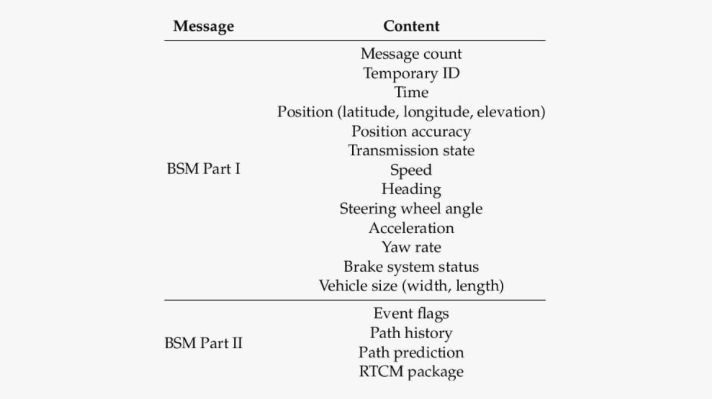
Current cooperative autonomous driving systems rely on Basic Safety Messages (BSMs) within Vehicle-to-Everything (V2X) communication. Each vehicle regularly transmits BSM data, sharing essential information such as speed, position, and heading with surrounding vehicles. This allows vehicles to assess potential collision risks and respond accordingly.

However, BSMs alone cannot convey the intent behind a vehicle’s movements. As shown in the graph below, a BSM provides only fundamental status data without explaining why a vehicle is moving in a certain way.

Basic Safety Messages within V2X

In other words, while BSMs enable cooperative autonomous driving, they lack the capability to communicate driving intentions. If vehicles could understand the purpose behind each movement in advance, particularly in emergency situations, driving safety and efficiency would significantly improve.

Real-World Scenario: The Need for MSCS

To illustrate this, let’s define two key entities:

  • HV (Host Vehicle): The vehicle transmitting its movement intention.
  • RV (Remote Vehicle): The vehicle receiving the movement information.

Now, consider a different scenario: What if the HV had already informed nearby RVs of its intent to change lanes in advance? In that case, the RV could adjust its route ahead of time, leading to a smoother and safer driving experience.

The same idea applies beyond driving. In any situation, whether at work, in school, or during teamwork, understanding someone’s intentions before they act allows for better planning, coordination, and overall efficiency.

What is MSCS?

To overcome the limitations of BSMs, the Maneuver Sharing and Coordinating Service (MSCS) offers a smarter approach to cooperative driving.

MSCS enhances V2X communication by enabling vehicles to share their intended maneuvers. Understanding the purpose behind a vehicle’s movement enables better analysis and response, enhancing overall road safety and efficiency.

Unlike traditional BSM-based driving, which reacts to real-time data, MSCS enables proactive decision-making by considering the planned maneuvers of surrounding vehicles. This advancement leads to a smoother and more coordinated driving experience.

Autonomous Maneuver Sharing in SAE J3186 standards

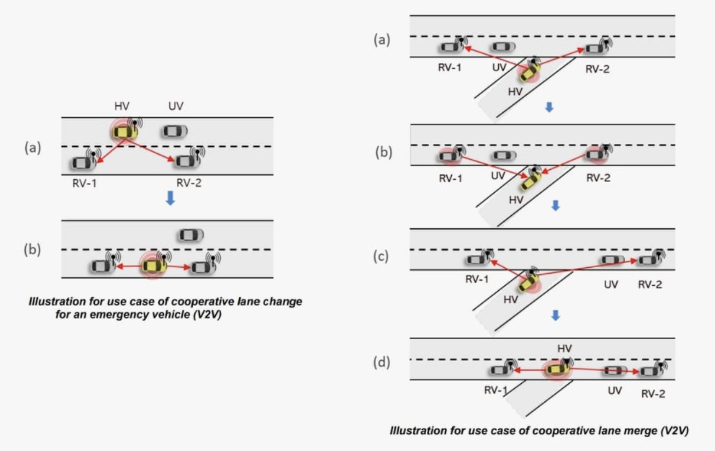
MSCS operates in compliance with SAE J3186 standards, which defines its primary use cases as:

  1. Cooperative Lane Change
  2. Cooperative Lane Merge

These scenarios demonstrate how MSCS enables smoother lane changes and merges by allowing vehicles to communicate their intended movements. Through MSCS, vehicles notify one another and cooperate to execute maneuvers safely.

It is important to note that MSCS is designed to function based on vehicle intent and follows two distinct communication protocols:

  1. General Vehicle Protocol: Requires mutual negotiation through request and response interactions.
  2. Emergency Vehicle Protocol: Prioritizes emergency vehicles (e.g., ambulances, police cars) without requiring negotiation from surrounding vehicles.

In general, standard vehicles (following the General Vehicle Protocol) must yield to emergency vehicles (following the Emergency Vehicle Protocol). This ensures that special-purpose vehicles can operate efficiently without mutual negotiation.

By implementing MSCS, vehicles can share movement intentions, enabling others to adapt proactively. This results in safer, more efficient, and cooperative autonomous driving.

MSCS and MSCM

Next, let’s differentiate between MSCS and MSCM to explore the operational aspects of MSCS.

  • MSCS (Maneuver Sharing and Coordinating Service): The overall system that enables maneuver coordination
  • MSCM (Maneuver Sharing and Coordinating Message): The message exchanged between vehicles to communicate movement intent

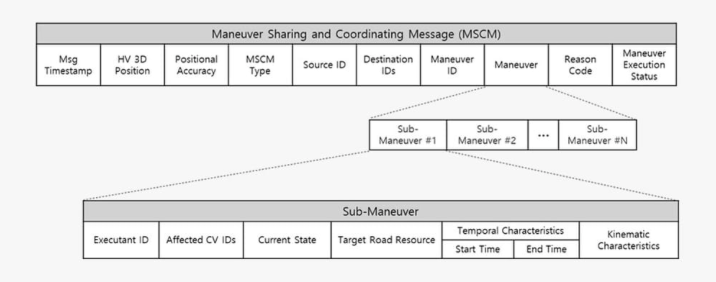
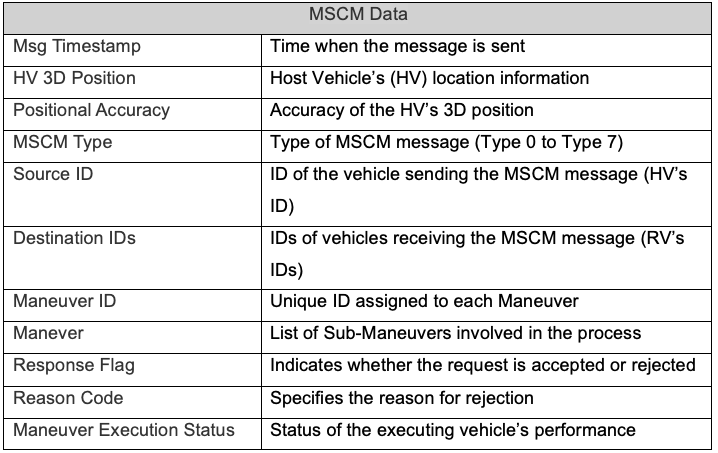
The graph below illustrates the structure of MSCM:

Structure of Maneuver Sharing and Coordinating Service (MSCM)

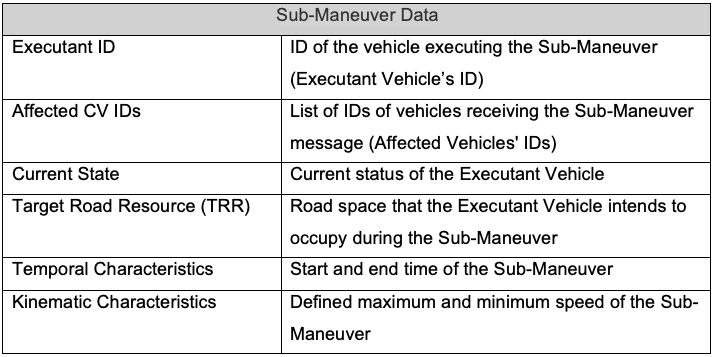
In MSCS, a Maneuver represents a coordinated movement involving multiple vehicles, while a Sub-Maneuver refers to the individual actions each vehicle takes to carry out that Maneuver.

The Executing Vehicle (HV) initiates the Maneuver request and identifies surrounding Affected Vehicles, which receive MSCM messages to coordinate movement. HV must obtain agreement from Affected Vehicles unless it is an emergency vehicle.

MSCM Data Structure

MSCM Data Structure

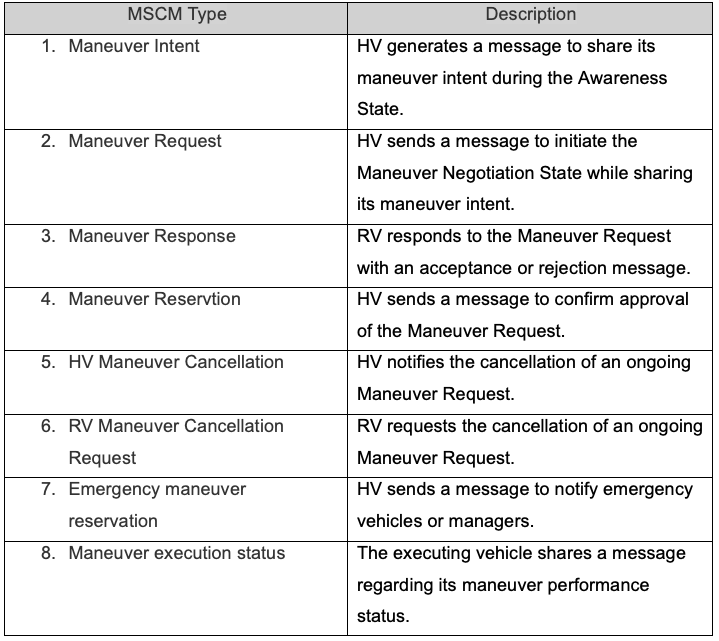
MSCM messages contain key data components, including the MSCM Type, which classifies messages into one of eight types:

Autonomous Maneuver Sharing: MSCM Type

Additionally, each Maneuver in MSCM consists of multiple Sub-Maneuvers, structured as follows:

Sub-Maneuvers Data

In conclusion, there are 8 types of protocols for each Maneuver in MSCM.

MSCS Operational Process

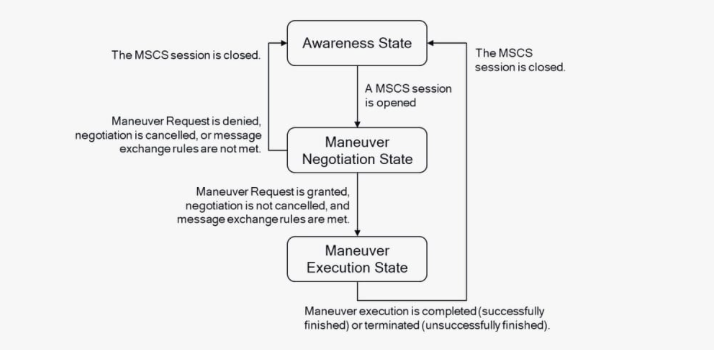
To understand the operation of MSCS, let’s examine how it functions in standard vehicles. The system follows three sequential stages:

  1. Awareness State
  2. Maneuver Negotiation State
  3. Maneuver Execution State

MSCS Operational Process

  1. Awareness State
    • This is the preliminary stage of MSCS operation
    • While vehicles are aware of their surroundings via BSM, they have not initiated MSCS yet
    • Only MSCM Type 0 messages (intention notifications) can be sent in this stage
  2. Maneuver Negotiation State
    • Vehicles begin negotiating the execution of a Maneuver
    • Emergency vehicles skip this step, as negotiation is not required
    • MSCM Types 1-3 are used to request and confirm Maneuvers, while Types 4-5 handle cancellations
  3. Maneuver Execution State
    • Vehicles execute the approved Maneuver
    • The HV and RV reach a mutual agreement and act accordingly
    • MSCM Type 7 messages confirm execution, and the Maneuver concludes when all Sub-Maneuvers are completed.

In conclusion, Maneuver Sharing and Coordinating Service (MSCS) represents a significant advancement in autonomous driving, allowing vehicles to communicate their movement intentions and not just their basic status. By enhancing Vehicle-to-Everything (V2X) communication, MSCS improves safety, coordination, and efficiency on the road. Unlike traditional systems that react to real-time data, MSCS enables proactive decision-making, particularly in complex scenarios like lane changes or merges.

With protocols that prioritize emergency vehicles and ensure smooth coordination, MSCS creates a structured environment for vehicles to work together seamlessly. This proactive approach helps prevent collisions, reduces traffic congestion, and leads to safer, more efficient roads. As autonomous vehicles continue to evolve, MSCS will be at the forefront of shaping a future where roads are not only safer but also smarter, bringing us closer to a fully integrated, autonomous transportation system.


To stay informed about the latest news on mobility tech and software-defined vehicles, read our blog for more technology insights or subscribe to AUTOCRYPT’s monthly newsletter.